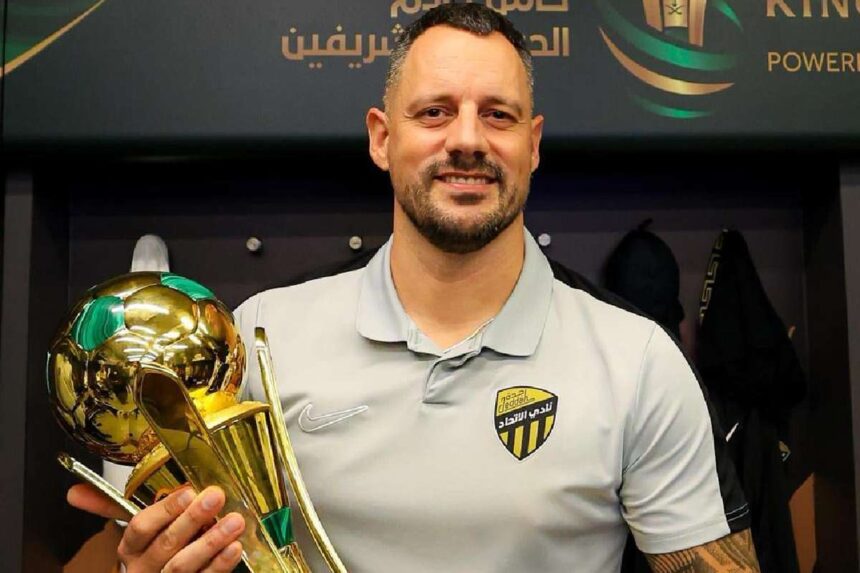
Exclusive Interview with Jesús Salvador: Insight into Serbian Goalkeeping Strategies
In a revealing conversation with Flashscore’s Spain Country Manager, Óliver Domínguez, Jesús Salvador, the goalkeeping coach of the Serbian national team, shared his insights about the upcoming friendly match against Spain and his experiences in the realm of professional football coaching. With an impressive background that includes stints at renowned clubs like Al-Ittihad, Almería, and Espanyol, Salvador brings a wealth of knowledge to the Serbian side.
As Salvador prepares for his second FIFA international window with Serbia, he reflects on their previous World Cup qualifying challenges and the thrill of facing a team like Spain. “It was unexpected that our opponent was going to be Spain. Originally, we were scheduled to compete against Saudi Arabia, but due to the ongoing conflicts, that match was cancelled. Now, facing Spain brings a new excitement,” he expressed. His focus is on maximizing the experience, insisting that the team must treat the match with utmost seriousness, despite it being labeled a friendly.
On the logistical aspects of arranging the match against Spain, Salvador detailed the process that unfolded while he was in Madrid, where he teaches at UEFA GK Courses. The stroke of luck came when he connected with Miguel Angel Espana, the goalkeeping coach for the Spanish national team, amidst discussions of venue changes for Argentina’s match. “Our names came up during those conversations and shortly after, we were able to confirm the friendly,” he noted.
Salvador’s journey to the Serbian national team is marked by serendipity. Following his departure from Al-Ittihad in Saudi Arabia after a disappointing fourth match into the season, he found himself recommended to Serbian coach Veljko Paunovic, who was in search of a goalkeeping coach. “Everything happens for a reason,” he mused, highlighting the swift transition that led him back to European football.
Commenting on his daily routine with the national team, Salvador painted a picture of a calm yet structured environment. His responsibilities include preparing training sessions and analyzing the performance of approximately 183 Serbian goalkeepers spread across major leagues. “We have to stay updated and vigilant about their progress, including young talents from the U-21 and U-19 categories,” he explained. The work resembles a pre-season setup, focusing on recovery and tactical integration, particularly as these players arrive from clubs with intense schedules.
When discussing the differences between coaching at club level versus a national team context, Salvador emphasized the importance of strategic data analysis and preparation. “In national team settings, we have the luxury of time to evaluate and adapt our strategies, compared to the rapid, high-stakes environment of club football,” he stated. This preparation is crucial for optimizing player performance while minimizing physical strain during their short training camps.
Salvador highlighted the attributes of Serbia’s goalkeepers, specifically praising Djordje Petrovic, the young talent at Bournemouth, noting his eagerness to learn and humble nature. He drew parallels between Petrovic, Vanja Milinkovic-Savic, and Predrag Rajkovic—all of whom share a dedication to improving their skills without an air of self-importance.
As the conversation shifted to his coaching philosophy under head coach Paunovic, Salvador appreciated the modern approach Paunovic takes, which emphasizes effective communication and team synergy. He also touched upon the distinct methods of set-piece analysis that are part of their training regimen, showcasing their proactive defense tactics.
Reflecting on his previous experience under Laurent Blanc in Saudi Arabia, Salvador described the high-caliber environment at Al-Ittihad, laden with international stars. “Working with legends like Karim Benzema was a highlight, as he brought not just skill but also the gravity needed to motivate a team,” he commented on the iconic players that boosted the club’s profile.
His brief tenure at Almería and subsequent decisions under Vicente Moreno illustrated the volatile nature of coaching careers, where results are paramount. “We played attractive football but were ultimately let go after failing to secure wins in the initial matches. That’s football for you,” he recounted.
Salvador’s grassroots experience at Espanyol, where he first entered the professional realm, underscored the importance of building foundational skills in young players. Notably, he spoke highly of Joan Garcia, a standout from the club’s youth, noting his intelligence and composure as key traits that would serve him well as he progresses.
As the Serbian side gears up for their encounter with Spain, Salvador’s reflections not only highlight his personal career trajectory and strategies but also emphasize a broader narrative of resilience and ambition within the Serbian football landscape. He remains dedicated to nurturing the next generation of talent while cultivating a competitive spirit in the national team.