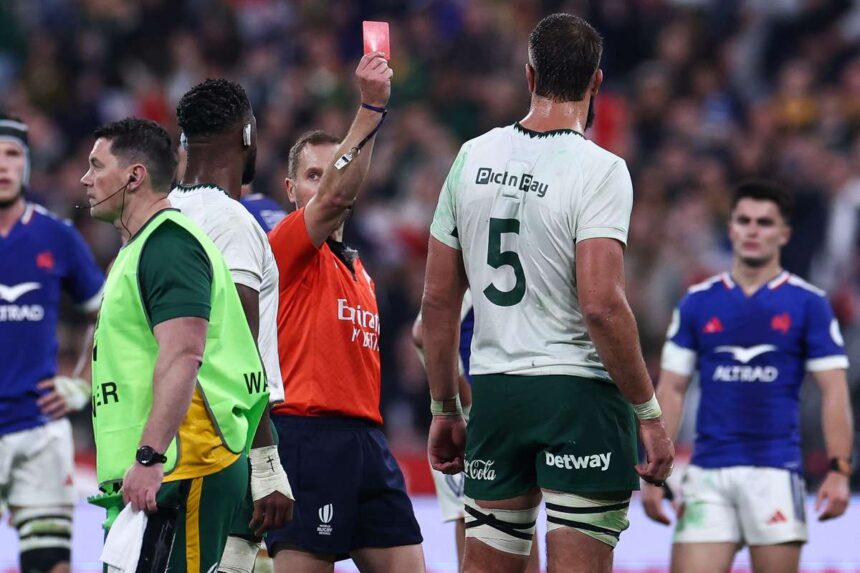
Consequences of Recklessness: Lood de Jager’s Suspension
In an era where the margins between victory and defeat are razor-thin, the indifference to safety on the rugby field proves costly. Lood de Jager, the South African lock, faces the grim reality of a four-match ban, a consequence of his reckless no-arms tackle on French full-back Thomas Ramos during a tense Autumn International match. This incident not only highlights the volatility of the sport but also the blatant disregard some players exhibit towards safety protocols.
The Fallout of a Single Mistake
The Independent Disciplinary Committee has ruthlessly upheld the red card issued during the match despite attempts to argue for leniency. Initially, a six-match ban was deemed suitable, reflecting the committee’s stringent stance on player safety. However, they decided to trim it by two weeks, showcasing a baffling inconsistency in their punitive measures. It raises pressing questions: Is this leniency a mockery of the growing concerns regarding head injuries and player welfare?
Missed Opportunities Ahead
De Jager’s reckless act will see him sidelined from crucial encounters against Italy, Ireland, and Wales—matches that could easily shape the trajectory of the Springboks’ season. The collision of high stakes and poor decisions often leads to disaster, a reality that fans and players alike must confront. Not to mention the impact on his domestic obligations with the Wild Knights, as he will also miss a pivotal Japan League One match. The ramifications extend far beyond the field, affecting his team’s composition and morale.
Coaching Intervention: A Wasted Chance?
In the context of an evolving sport, the opportunity for players like De Jager to participate in World Rugby’s Coaching Intervention Programme raises eyebrows. Is it truly a progressive step towards reinforcing discipline, or just a fleeting attempt to rehabilitate reputations? This serves as a stark reminder that even the most talented athletes can falter, but the path to redemption remains fraught with its contradictions.
Conclusion: A Call for Accountability
As the dust settles on this incident, the focus inevitably shifts back to the sport’s governing bodies. Are the protocols in place rigorous enough to deter reckless behavior, or merely gestures that fail to address the core issues at hand? The time has come for all stakeholders—players, coaches, and governing bodies—to engage in a dialogue about accountability. In the world of rugby, the battle for safety and integrity must not be an afterthought but a foundational principle. Only then can the game evolve without sacrificing the very essence of its spirit.