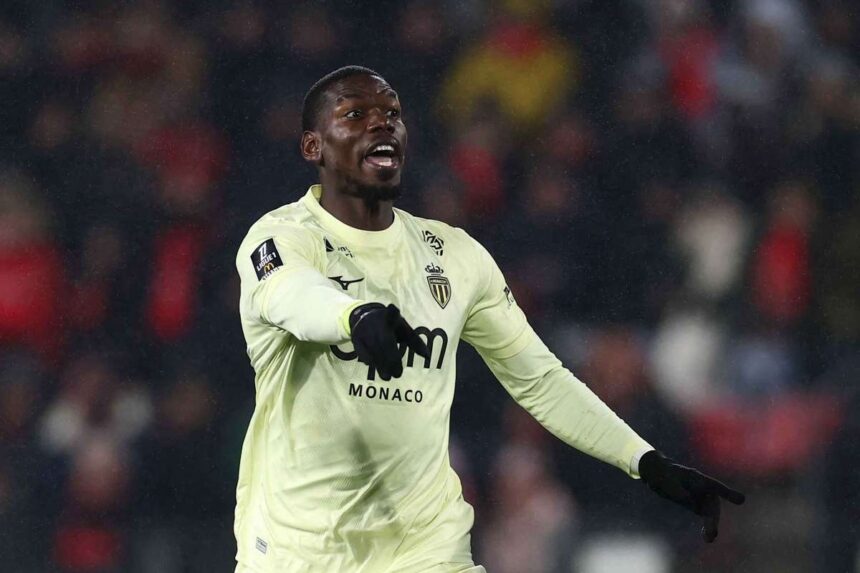
Paul Pogba: From the Depths of Doping to the Heights of Hope
In a twisted saga of redemption and public spectacle, Paul Pogba has resurfaced, stepping onto the pitch like a phoenix from the ashes of an 18-month doping ban. The beloved midfielder, once celebrated as a footballing genius, dissipated under the weight of scandal, only to make his emotional comeback with Monaco, a club that ironically seems to mirror his turbulent journey.
Monaco’s New Hope: A Powerful Return
Pogba’s return was not merely a personal feat; it was a declaration of existence after two years marred by a scandal that transfixed the football world. The former Juventus and Manchester United star had languished in oblivion, stripped of his dignity and the game he loved most. Now, he emerges not just as a player, but as a symbol — a symbol of relentless faith in one’s ability to rise, no matter how low one has fallen.
The Doping Controversy: The Unforgiving Spotlight
With a four-year ban looming ominously before him, the age of incredulity around Pogba’s case was overwhelming, but destiny intervened — reducing the sentence to 18 months, thanks to an appeal. Of course, the sport is often unforgiving; any hint of wrongdoing brands athletes with an indelible mark that fans often never forget. The substance in question, DHEA, which spikes testosterone levels, now hangs over him like a shadow, taunting his every movement on the field.
A Standing Ovation: The Crowd’s Reluctant Acceptance
Desperate for a clean slate, Pogba cautiously returned amidst a thunderous applause that suggests a mixed cocktail of emotions swirling in the crowd. While some rejoiced at his comeback, the question remains: can genuine redemption coexist with the stain of past mistakes? As he stood on the sidelines, the 85th minute confirmed that he was both embraced and scrutinized. The standing ovation was laced with hope, but also with skepticism — a manifestation of a society grappling with forgiveness.
Declaring Steel: The Pressure of Performance
In an era where a player’s worth is dictated by their ability to perform under pressure, Pogba’s self-imposed expectations weigh heavily. He’s not just in a battle for his place in football; he’s fighting for his identity. His words resonate with the gravity of a man reborn into a world his mistakes threatened to dismantle. “If I don’t perform well at Monaco,” he warns, “I can forget about the French national team.” A chilling proclamation underscoring the fragile nature of grace in professional sports.
What Lies Ahead?
With a Champions League match against Pafos looming and a monumental encounter with Paris St Germain on the horizon, the stage is set for Pogba’s theatre of dreams. His journey, condensed into a few moments of play, echoes a poignant reminder: the road to redemption is fraught with challenges, but it is a journey worth undertaking nonetheless. The question is, how will he navigate this treacherous terrain, where specters of past failures loom ominously behind every dribble?
Conclusion: A Journey of Reflection
Pogba’s saga challenges the narrative of success and failure, shedding light on the complexities of human experience. How he chooses to respond to this rebirth will etch his legacy, either as a squandered talent or as a testament to resilience. In the annals of football history, his tale of redemption will reverberate, forcing fans and critics alike to ponder: should we let the past define us, or will we rise, like Pogba, in defiance of it?