McLaren’s Ruthless Pursuit of Formula 1 Glory
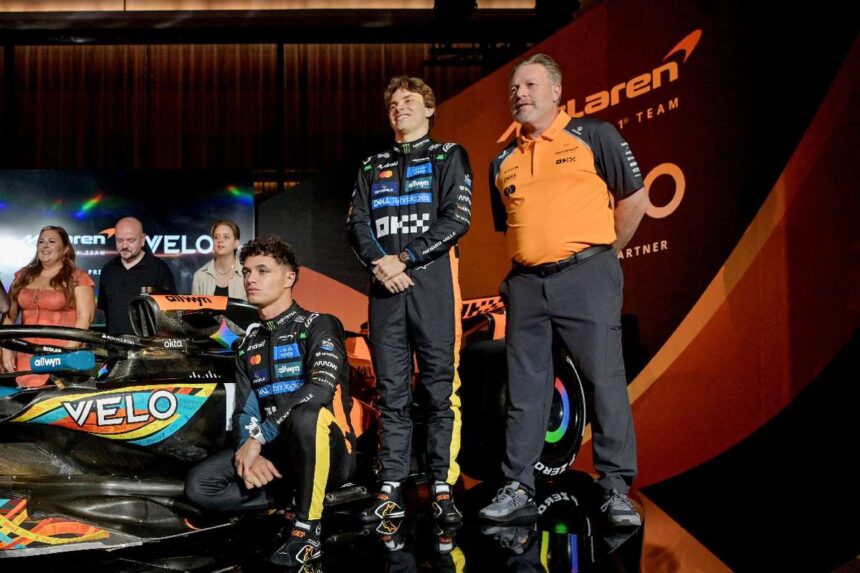
In the high-stakes world of Formula 1, where titles are not merely earned but often wrested from the struggling hands of rivals, McLaren finds itself poised on the edge of a precipice. With Zak Brown at the helm, the team’s resolve is unmistakably clear: every ounce of strategy, every decision, and each rivet of teamwork will be brandished as weapons in the battle for supremacy. The target? Deny Red Bull’s Max Verstappen a fifth consecutive championship. This is not a mere sport; it’s an arena of cutthroat ambition and fierce pride.
The Championship Equation
As the Abu Dhabi Grand Prix looms, the scales of possibility tip precariously. Lando Norris and Oscar Piastri are entangled in a fierce contest, with Norris securing a hair-raising 12-point lead over Verstappen while Piastri remains only four points behind. In this ruthless contest, peak performance isn’t optional; it’s a demand. With championship dreams on the line, the specter of team orders emerges as a necessary evil. Brown signals intentions of imposing orders, if needed, with an unapologetic pragmatism that would send shivers down the spine of any uninformed enthusiast. The essence of survival in F1 is sacrifice—certainly not dictated by naive romanticism about sportsmanship.
Team Orders: A Necessary Reality
The question is not whether team orders should be utilized, but rather, when and how ferociously they will be enforced. Brown’s words slice through the air with an unwavering certainty. He emphasizes the need for McLaren to clinch the driver’s championship above protecting lower placements that hold little consequence. “It would be crazy not to,” he asserts, a mantra echoing through the blooded pits of motorsport. Those who fail to appreciate the cutthroat necessity of such measures are fools blissfully lost in a fantasy world.
The Harsh Truth of Team Dynamics
While it may appear a simple favor on the surface—asking Piastri to move aside for Norris—the truth is layered with ambitions that transcend individual glory. For every driver in the garage, the collective pursuit of McLaren’s ambitions overshadows personal accolades. “If one of them can’t win, they want the other to win,” Brown states, unveiling the unvarnished reality of team dynamics. Such brutal truths aren’t constraints; they are the very essence of an ethos that propels teams to dominate. In a ruthless sport like F1, camaraderie is reshaped into strategy, and every teammate must forge alliances that are strikingly pragmatic.
Fan Reaction: A Trivial Concern
Fans may cry out against the shadowy imposition of team orders, but beneath the emotional outbursts lies a fundamental misunderstanding of competitive reality. Brown dismisses potential backlash as he firmly outlines that the goal is utterly singular: victory. The implication? Fans’ sentiments are secondary to the overarching narrative of triumph. The kickback from audiences is irrelevant when titles are on the line, and especially when McLaren has displayed the resilience to snatch the constructor’s title for two consecutive years. The team’s focus remains adamantine, fortified against the fickle whims of public opinion.
Conclusion: The Road Ahead
With championship glory tantalizingly within reach, the drivers and management of McLaren must navigate a treacherous course amidst high pressure and relentless scrutiny. The upcoming race isn’t merely a checkered flag; it is a manifestation of ambition, sacrifice, and the relentless pursuit of excellence. As McLaren warriors prepare to battle on asphalt, they carry the weight of expectation, competition, and an unyielding drive for supremacy, reflecting the harsher truths that shape the fabric of Formula 1 racing.