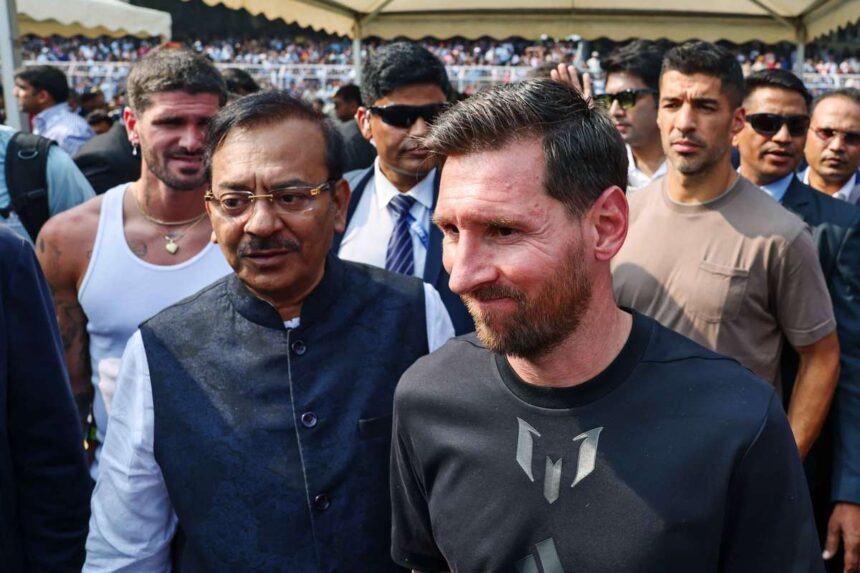
Lionel Messi’s Frustrating Encounter in Kolkata
The much-anticipated visit of footballing icon Lionel Messi to India spiraled into chaos, showcasing the colossal gap between celebrity adoration and organizational failure. Fans in Kolkata, who anticipated a glimpse of their idol, instead found only disappointment and anger as their fervent enthusiasm unraveled into an uncontrollable mob scene. The sheer ineptitude of the event organizers turned what should have been a celebration into a stark reminder of how negligence can pervade even the most secure settings.
The Disgraceful Events Unfold
Messi’s scheduled appearance—a mere 20 minutes instead of the promised 45—ignited a firestorm of frustration among fans, with many having shelled out exorbitant ticket prices that far exceeded their average weekly earnings. As soon as the football legend made his brief appearance, pandemonium erupted. Ripped-up seats, furious fans clambering over fences, and a barrage of objects raining down on the pitch painted a picture of utter disarray.
Detention and Accountability
In a desperate attempt to restore some semblance of order, local police detained Satadru Dutta, the chief organizer. A measure that, while necessary, feels steeped in irony as it does little to address the deeper issues of systemic mismanagement and accountability that led to this incident. The director general of West Bengal police, Rajeev Kumar, stated that action would be taken, yet such pledges often evaporate in the aftermath of sporting debacles.
A Disheartening Apology
West Bengal’s Chief Minister, Mamata Banerjee, offered her apologies, expressing shock at the mismanagement displayed at Salt Lake Stadium. While her words resonate with a sense of distorted empathy, they merely scratch the surface of the deeper cultural and administrative issues that exist in Indian sports. The immediate promise of a probe into the incident fails to mask the reality that such promises rarely lead to meaningful change.
A Historical Context of Chaos
This incident is not an isolated case in Kolkata’s sporting history. The Salt Lake Stadium has witnessed its share of mayhem, including violent fan riots during critical matches. The legacy of sporting events in this city is marred by chaos and disregard for fan safety. The contrast between the glamour of global football icons like Maradona, who had previously graced this city, and the current reality of utter disarray speaks volumes about the inconsistency in handling such high-profile events.
Messi’s Legacy and the Reality Check
Messi’s status as a global sports icon does not insulate him from the harsh realities of poorly executed events. His brief visit, which included unveiling a statue in his honor, should have been a moment of triumph, not a scene of chaos. The disparity between the grandeur associated with such figures and the actual execution of their engagements serves as a glaring commentary on the abilities—or lack thereof—of those in charge.
A Ripple Effect on Indian Sports Culture
The fallout from this incident threatens to embolden detractors of Indian sports management, highlighting persistent failures in infrastructure, planning, and execution. The intermingling of fan culture and organizational incompetence raises pressing questions about how sports are administered in a cricket-dominated environment that often marginalizes football, despite its following in certain regions.
Reflections on the Day’s Events
As the dust settles on this debacle, the real tragedy lies not just in the immediate chaos but in the long-standing issues that plague sports management in India. While sports fans may ponder the implications of Messi’s chaotic visit for future events, it remains evident that significant changes are necessary. The opportunity to learn from this mismanagement should not merely be a footnote in the narrative of Indian sports, but rather a pivotal moment that demands accountability and urgent reform.
Source: Flashscore News