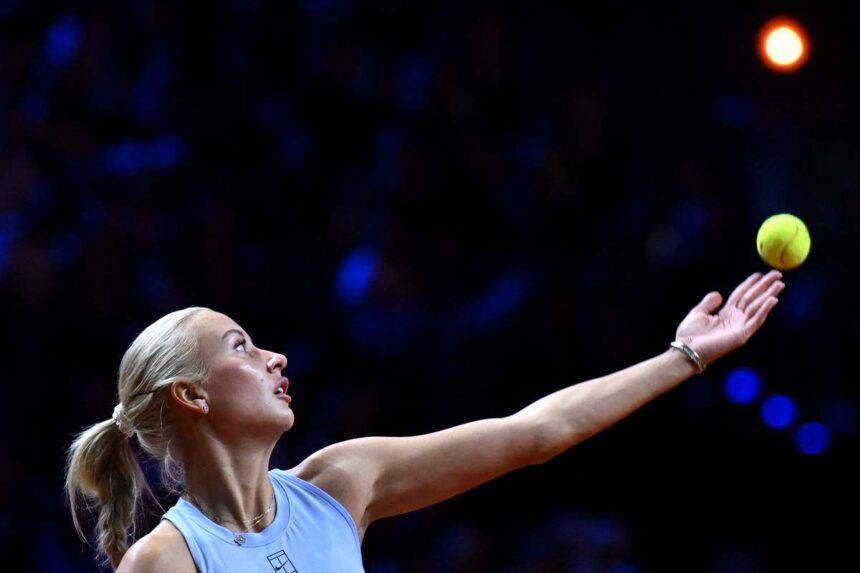
Anastasia Potapova: A Shift in Allegiance Amid Turmoil
In a world where sports have increasingly intertwined with political landscapes, Anastasia Potapova emerges as a striking figure. The 24-year-old tennis sensation, currently ranked 51st globally, has recently announced her switch from representing Russia to Austria. This decision, however, comes not without its complexities and the backdrop of an unjust and conflicted geopolitical arena.
Russian Athletes Under Fire
The war in Ukraine has cast a long shadow over Russian athletes, banishing them from competition under their own flags. Potapova has navigated these turbulent waters as a neutral player since 2022, but merely wearing her support for the Spartak Moscow soccer team during a match drew the ire of critics and a formal warning from the WTA. It was a stark reminder that in the realm of sports, allegiances can be scrutinized, and every action has its consequences.
The Nonchalant Shift
With her recent social media announcement touting Austrian citizenship, Potapova appears to shrug off the controversy that has plagued her. “I am proud to announce,” she states, emphasizing her newfound commitment to Austria starting in 2026. This proclamation, while celebratory, implies an unsettling trend among athletes seeking refuge from political controversies in their homelands.
Following in the Footsteps of Others
Potapova is not alone in this journey. Daria Kasatkina, Varvara Gracheva, Elina Avanesyan, Maria Timofeeva, and Natela Dzalamidze have also chosen to switch their national representations since the conflict’s escalation. Each transition raises questions about identity, loyalty, and the price paid by athletes forced to make such harrowing decisions in the name of survival and success.
The Price of Silence
In a starkly politicized environment, standing idle risks becoming complicit. Potapova’s prior display of national pride could be viewed as a calculated risk. Her later defense of that provocation—claiming a lifelong fandom—casts a shadow of doubt on her current motivations. The sport’s governing bodies find themselves at a crossroads, wrestling with issues far beyond the complexities of mere competition.
A Broader Reflection
As Potapova moves forward, the implications of her choices extend beyond personal triumph. They challenge the very essence of what it means to represent a nation and the hope of athletes everywhere caught in political crossfires. The sport’s integrity is constantly tested, and the narratives of these athletes compel observers to reflect on the broader societal implications of their actions in a tumultuous world.
Conclusion: The Unseen Struggle
With a relentless media spotlight and societal pressures looming large, athletes like Potapova grapple not only with their performances on the court but with the haunting echoes of their homeland’s tumult. Every shift in allegiance is not merely a strategic maneuver; it is a testament to a struggle that transcends sports, urging the audience to delve deeper into the complex tapestry of identity, loyalty, and human resilience.