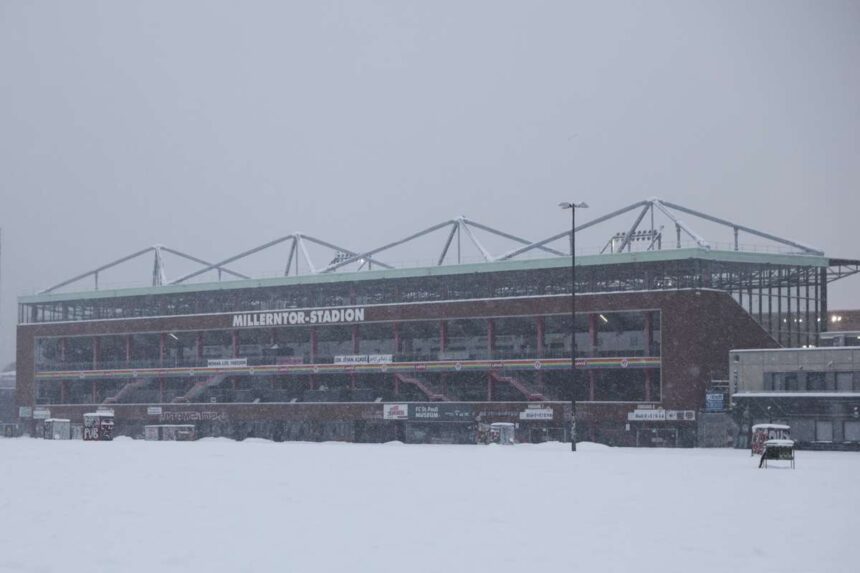
Heavy Snowfall Disrupts Bundesliga Action
In a jaw-dropping twist of fate, the Bundesliga’s anticipated clash between St. Pauli and RB Leipzig was unceremoniously halted by Mother Nature. A merciless snowstorm blanketed Hamburg, leading to a dramatic postponement as icy conditions rendered the pitch unplayable. This isn’t merely a case of bad luck; it’s a wake-up call about the increasingly volatile nature of sports scheduling amid unpredictable weather patterns.
Authority’s Decision: Safety Over Spectacle
The German Football League (DFL) released a statement detailing the closure of the Millerntor Stadium. Local authorities weighed in on the safety risks that a snow-laden stadium posed for players, officials, and fans alike. The match, which was meant to relaunch the Bundesliga after winter hibernation, instead became a testament to the challenges of sports in the face of severe weather.
A Bleak Weekend: More Matches at Risk
While the postponement of the St. Pauli vs. Leipzig match is undoubtedly a letdown, it raises serious questions about the viability of other weekend fixtures. With snowstorms having swept through the region, concerns now loom over upcoming clashes, including the anticipated showdown between Union Berlin and Mainz 05, as well as Hoffenheim’s game against Werder Bremen. The frostbite of winter makes one wonder: are sports leagues equipped to handle such disruptions?
The Season’s Start: A Chilly Reception
The Bundesliga’s steely return from its three-week winter break was intended to spark enthusiasm among fans desperate for thrilling football action. Instead, it has devolved into a logistical nightmare, illuminating just how precarious the football schedule can be. The question isn’t just whether games can be played – it’s whether they should be, given the dire conditions.
Coming Soon: A New Date for the Clash
While the DFL has promised that a new date for the long-awaited match will be confirmed shortly, the specter of uncertainty still hangs heavy in the air. Fans, players, and officials alike find themselves at the mercy of meteorological whims, pondering when, or if, they will see their beloved teams back on the pitch. The ramifications of such disruptions stretch far beyond the immediate inconvenience, bringing to light larger systemic issues within professional sports.
Conclusion: A System Under Strain
This scenario transcends the icy surface; it underscores a greater vulnerability in the sporting world. As fans await the rescheduled match, the challenges posed by nature and larger logistical concerns deserve scrutiny, pushing us to rethink how leagues prepare for such unpredictable disruptions. Just as athletes adapt to the rigors of competition, so too must leagues adapt to the capricious forces of nature.