Trine Ostergaard’s Return: A Game-Changer for Danish Handball
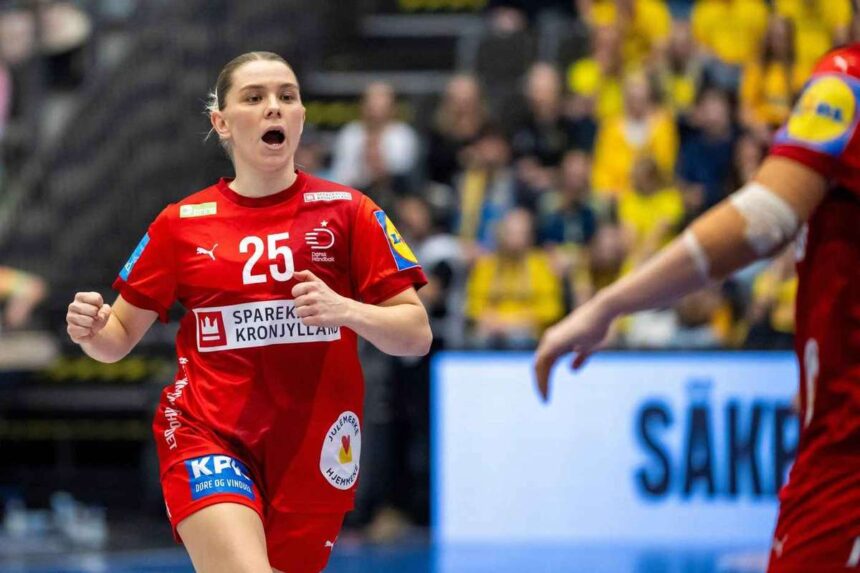
Trine Ostergaard, the esteemed captain of the Danish national handball team, is poised to break new ground as she announces her return to Viborg HK. This move comes as CSM Bucuresti’s loss, dragging the Romanian club down into the abyss, while simultaneously uplifting the Danish powerhouse. Signing a two-year contract, Ostergaard’s return is not merely a transfer; it’s a power play that redefines her legacy in Danish handball.
Shattering Expectations with Experience
Viborg HK’s management couldn’t have asked for a better acquisition. Ostergaard is not just any player; she’s a colossus in the realm of handball—known for her fierce dedication on the court and her leadership prowess off it. As Viborg’s director, Jens Steffensen, puts it, she’s “from the absolute top shelf.” This statement rings loud for fans who demand excellence. In an era where mediocrity often passes for greatness, Ostergaard’s caliber is a breath of fresh air.
The Consequences of Coaching Changes
Ostergaard’s exit from CSM Bucuresti, catalyzed by the club’s coaching upheaval, is anything but incidental. The arrival of a new coach—a familiar face from her past—has prompted a shift in the dynamics that she could foresee. Her acknowledgment of this challenging environment raises an alarm about the instability rampant in professional sports today. The candid remarks she shared with TV 2 Sport expose the underlying fragility of loyalty in modern handball, but why should a player thrive where such chaos prevails?
A History of Excellence
By the end of 2025, Trine Ostergaard’s glittering career reflects sheer tenacity, showcasing her talent across 217 international matches with an impressive tally of 448 goals. Her accolades from various championships speak volumes about her contributions not only to her club but also to Danish handball’s prominence on the world stage. Yet, these achievements come with the grim acknowledgment of a system that often undervalues its luminaries.
The Handball Financial Crisis
Amidst all this, the financial discrepancies in the sport linger like a dark cloud over its brightest stars. In a sport where the best often earn a paltry sum compared to their football counterparts, the narrative grows increasingly desperate. It’s a glaring injustice—one that every serious fan, every aspiring player, ought to confront head-on. How can a system that grants minimal rewards to its finest players expect to nurture the next generation?
The Unfolding Saga of Danish Handball
As Ostergaard moves back home, her journey challenges not just herself, but the entire Danish handball infrastructure. Her career trajectory raises critical questions about the sustainability of talent amidst financial inequities. Each goal she scores for Viborg HK will not merely contribute to the scoresheet but will echo loudly as a call for drastic change within the league. The Danish nation, and indeed the global handball community, watches closely as she embarks on what promises to be a groundbreaking chapter in her illustrious career.
In a landscape riddled with uncertainty and shifting allegiances, the resilience of players like Trine Ostergaard becomes the beacon of hope amid disarray. The question remains: will the sport rise to meet her standards, or will it continue down the path of neglect?