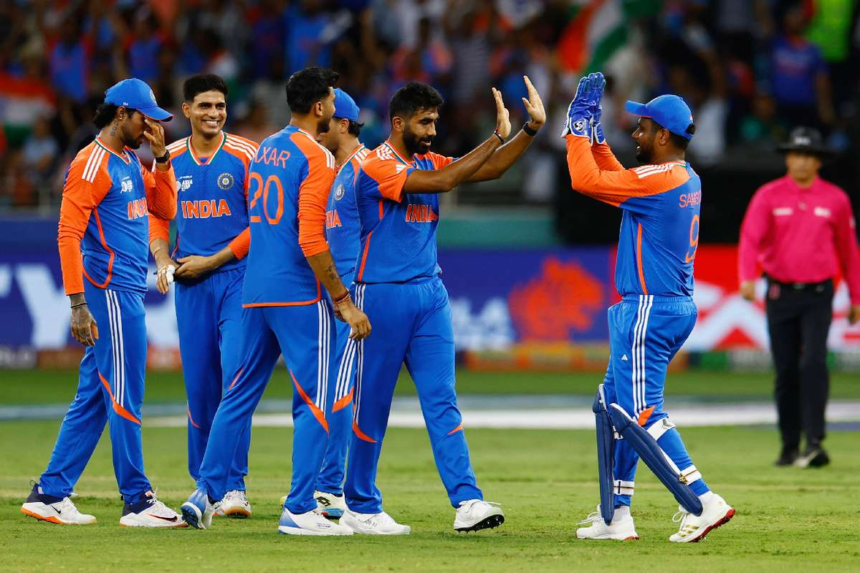
India’s Resounding Victory over Pakistan: A Charged Encounter
In an electrifying showdown, **India** crushed **Pakistan** by seven wickets during a politically-fraught clash in the Asia Cup held in Dubai. This match wasn’t just another cricket game—it served as a battleground echoing the tensions simmering between these nuclear-armed neighbors.
As the defending champions, India’s performance was nothing short of dominant. With a masterstroke of strategy, they deployed a powerful spin attack, stifling Pakistan’s batting lineup to a mere 127 runs while claiming 9 wickets. This display wasn’t simply about victory; it was a statement, a rehearsed show of dominance in a region fraught with historical rivalry.
Key Players Steal the Show
Key contributions from players like **Abhishek Sharma**, who initiated India’s innings with a fiery 31, and **Tilak Varma**, who matched that with an impressive 31 of his own, ensured that the Indian side was off to a blistering start. Completing the narrative of success, **Suryakumar Yadav** anchored the innings with an unbeaten 47, leading his team home with a whopping 4.1 overs to spare, showcasing their ability to thrive under pressure.
The Shadow of Politics
This match carried a weight far beyond the cricket field. In the wake of recent border skirmishes and military posturing, there were pressing calls within India to withdraw from playing **Pakistan**. However, the **Board of Control for Cricket in India (BCCI)** held steadfastly to its policy of engaging with Pakistan in multi-team events. The refusal to back down highlights a courage steeped in rivalry, suggesting that for India, cricket serves as a stage to assert dominance.
Public Interest and National Pride
The fervor surrounding this match reflects deeper societal sentiments, where sport intertwines with national identity. Fans viewed this contest as more than merely a game; it is a reflection of pride and resilience in the face of historical contempt. The cricket field becomes a microcosm of an ongoing narrative that sees industry, politics, and societal expectations collide.
Analysis of Tactics and Future Implications
With tactical precision and a strategy deeply rooted in exploiting a talented bowling lineup, India emerged victorious, leaving cricket analysts to dissect the implications of this win. How does a triumph like this feed into the broader context of **Asian cricket politics**? Each victory and defeat carries a heavy load of expectation and interpretation that goes far beyond the numbers on a scoreboard.
As spectators, the question remains: What does this relentless pursuit of victory against Pakistan reveal about the nature of sportsmanship intertwined with nationalism? The answers may lie within the hearts of the fans and players alike, caught in a cycle of rivalry that only the thrill of victory can justify.