FIFA’s Pinnacle Awards: A Celebration of Talents
In a dazzling ceremony held in Doha, Qatar, the FIFA Best awards spotlighted the crème de la crème of football, illuminating the extraordinary achievements of the game’s elite in 2025. Among the prestigious winners, Ousmane Dembele emerged as the rightful recipient of the coveted Men’s Player award, while Aitana Bonmati clinched the Women’s title with unparalleled grace.
Dembele: The Apex Predator of the Pitch
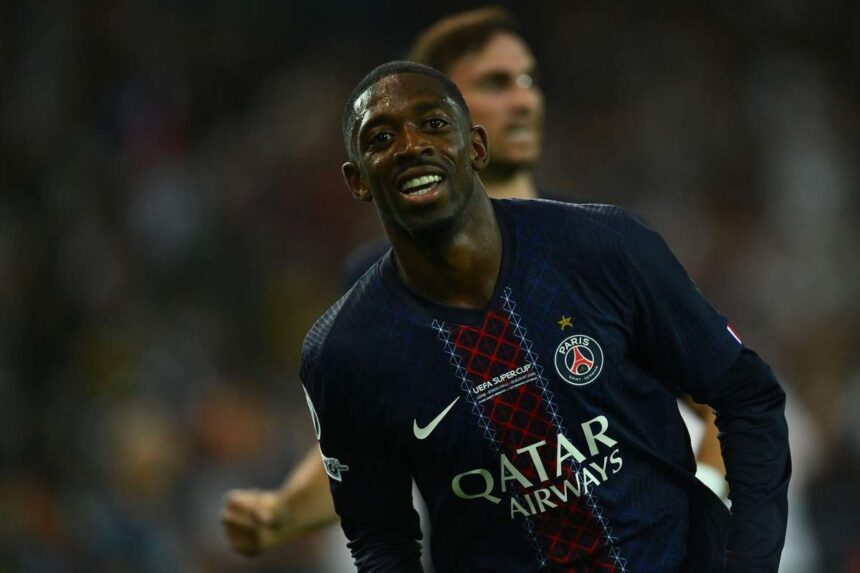
Despite his tumultuous start to the current season, characterized by fitness woes, Dembele’s breathtaking performance during the 2024/25 campaign made it impossible for critics to ignore his brilliance. As the linchpin of Paris Saint-Germain’s success, he played a pivotal role in delivering a tremendous quadruple victory, leading his team to triumph in both Ligue 1 and the Champions League. This accomplishment solidified his status not only as a leader on the field but also as a relentless competitor determined to etch his name in football history.
Comparison Among Giants
While Kylian Mbappe and Lamine Yamal were also in contention for the men’s accolade, their talents pale when placed alongside Dembele’s luminous accomplishments. The spotlight was firmly fixed on the Frenchman, where the expectations were high following his Ballon d’Or victory. Fans and analysts alike anticipated an award that encapsulated his extraordinary contributions in the face of adversity and pressure.
Bonmati: A True Champion
On the women’s side, Aitana Bonmati’s ascent as the FIFA Best Women’s Player is not merely commendable; it is a testament to her prowess as the driving force behind Barcelona and Spain’s success on the international stage. Her recognition serves to amplify the narrative of women’s football, showcasing the relentless ambition and sheer talent that is often overshadowed. To claim this victory as a Ballon d’Or winner is indeed a fitting accolade for an athlete who has redefined excellence.
Coaches in the Limelight
In tandem with the player recognitions, the accolade for the Best FIFA Men’s Coach went to Luis Enrique, while Sarina Wiegman claimed the award for Best FIFA Women’s Coach. These individuals not only prepared their teams to ascend the ranks but also shaped the game with their strategic vision and unwavering commitment. Their leadership styles resonate across the pitch, reflecting the discipline and tenacity required to forge champions.
The Elite XI: A Convergence of Greatness
The announcement of the Team of the Year showcased a constellation of talent across genders, marking a historic convergence in a sport often riddled with disparities. The Men’s Team included stars like Gianluigi Donnarumma, Virgil van Dijk, and the unmistakable Ousmane Dembele himself. The Women’s lineup echoed this brilliance with luminaries such as Hannah Hampton, Aitana Bonmati, and Lucy Bronze leading the charge for recognition of their exceptional feats. This inclusivity marks a significant step forward in honoring the sport’s dual narratives.
Goalkeepers with Grit
Also worthy of mention are the accolades for the Best Goalkeepers of 2025, with Gianluigi Donnarumma and Hannah Hampton taking the honors. Their contributions in net proved critical as they expertly turned away countless attempts, forming the backbone of their respective teams and proving that defense is equally deserving of recognition in a sport that often glamorizes scoring.
Puskas and Marta: A Celebration of Aesthetic Football
Honoring the breathtaking artistry of the game, the FIFA Puskas Award recognized Santiago Montiel for the Best Men’s Goal, while Lizbeth Ovalle took the women’s category. These awards celebrate not just goals but the aesthetic beauty of football, where each strike can change the course of a match and linger in the minds of fans long after the final whistle.
Ultimately, the FIFA Best awards not only honor individual talents and collective efforts but also reflect the evolving nature of football itself, a sport that continues to challenge norms and elevate excellence. As awards celebrate accomplishments, they also prompt reflection on the progression, the disparities, and the luminous potential across both women’s and men’s football.