James Nnaji: A Controversial Debut
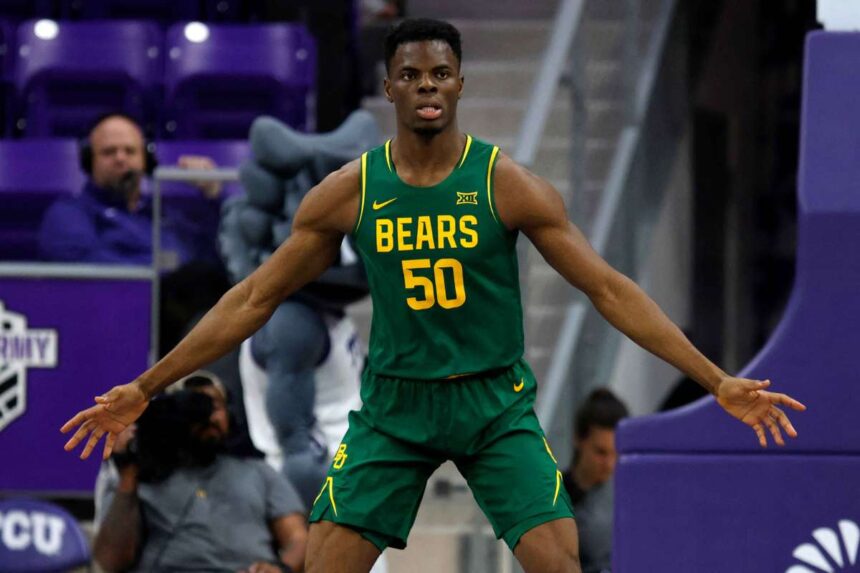
In a whirlwind of debate and skepticism, Nigerian center James Nnaji made his debut with the Baylor Bears amidst a storm of conflicting opinions. Selected in the 2023 NBA Draft, Nnaji’s controversial entry into NCAA basketball has sparked discussions that resonate across the sporting landscape, with eyes fixated on what this means for the integrity of college sports.
A Boisterous Welcome
On that fateful Saturday, Nnaji’s introduction to collegiate play was anything but silent. As he stepped onto the court against Texas Christian University, he was met with a cacophony of boos echoing from unsympathetic fans. In just over 16 minutes of play, he scored five points, accompanied by four rebounds, a moment overshadowed by the crowd’s relentless jeers. This reception reveals a fracture within the fanbase, questioning not just Nnaji’s presence, but the very ethos of college athletics.
The Balancing Act of Eligibility
Nnaji’s transition from Barcelona’s roster, where he honed his skills in Euroleague competitions, to the collegiate sphere raises eyebrows. His journey, from being picked 31st overall by Detroit to a complex series of trades that saw him land in New York as part of a multi-team deal, exemplifies the chaotic nature of player movement in professional basketball. The NCAA’s approval of his eligibility, despite his prior professional experience, underscores a growing concern: are we witnessing the dilution of collegiate purity? The line between amateurism and professionalism blurs further with each signing of players like Nnaji.
The NCAA Under Scrutiny
Amidst the uproar, prominent figures like Hall of Fame coach Tom Izzo have stepped forward, sharpening their criticisms of the NCAA’s governance. Izzo’s remarks cut straight to the heart of the matter; “If that’s what we’re going through, shame on the NCAA”. His disdain for the NCAA’s regulatory framework highlights a fundamental flaw in the system – a relic of a bygone era clashing violently with modern realism. Coaches who prioritize immediate success find themselves trapped in a moral battleground, and the NCAA, bound by outdated principles, stands at a stalemate.
Institutional Failures and the Coaches’ Dilemma
Baylor’s own Scott Drew acknowledged the systemic difficulties, echoing sentiments of alignment among college coaches but also the ineffectiveness of current regulations. His remarks signal an urgency for reform, a reactionary stance that many in the community are compelled to adopt. “We have to be ready to adjust,” Drew stated, recognizing the shifting tides of collegiate sports without offering a clear pathway forward. This ambiguous positioning reflects the deep-rooted confusion and frustration within the ranks of collegiate coaching.
A Future Shrouded in Uncertainty
As for Nnaji, he embodies both the potential and peril inherent in his unique situation, offering a mix of international prowess and untested collegiate stamina. Baylor’s focus on integrating him “step by step” reflects a cautious optimism, yet the broader implications of his signing haunt the NCAA like a specter. The evolution of NIL deals has transformed the appeal of college programs, making them a viable alternative to professional contracts that could eclipse the traditional paths taken by many young players.
Conclusion: The New Landscape of College Sports
As the sports community grapples with this fresh reality, one thing remains abundantly clear: Nnaji’s journey is a flashpoint igniting fierce debate about the future of college athletics. The potential for a slew of professional players entering the college system mid-season raises existential questions for the NCAA, the coaches, and the students themselves. As boundaries blur and new precedents are set, observers await with bated breath to see how this chapter unfolds in the historic narrative of collegiate sports.