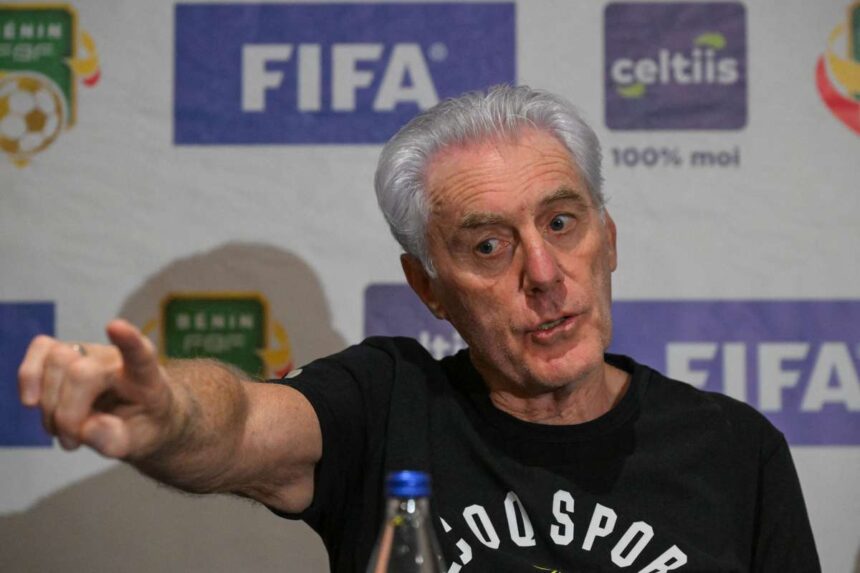
Hugo Broos: A Voice of Frustration Against FIFA’s Disregard
Hugo Broos, the South African national football coach, finds himself deeply frustrated with FIFA’s blatant disrespect towards African nations. The decision to allow clubs keeping national team players until the brink of the 2025 Africa Cup of Nations (AFCON) speaks volumes, but not in favor of fairness. Just six days before a critical tournament, this move blatantly showcases the disdain directed towards the continent’s efforts in the world of football.
An Insulting Timeline
Broos has explicitly stated that this callous scheduling is not merely an inconvenience; it’s a slap in the face of African football. The decision implies that clubs can prioritize their European campaigns over national pride, hamstringing teams that need every last moment to prepare for continental glory. Major rivals like Morocco, Senegal, and Cameroon, who rely heavily on overseas-based players, find themselves at an even greater disadvantage. A situation that would never be tolerated if the roles were reversed.
The Farcical Nature of Player Releases
As Broos rightfully points out, how can FIFA expect teams to perform at their peak under such short preparation times? The derisive timeline reveals a systemic bias—one that would spark outrage if a similar decree were imposed on major European competitions. Can one even envision teams like Germany or France facing such absurd hurdles ahead of their international fixtures? The answer is a resounding no. This is Africa, and the implications are starkly different.
South Africa’s Strategic Advantage?
Amidst the chaos, Broos manages to seek a silver lining. The disarray facing their competitors may inadvertently work to the advantage of South Africa’s Bafana Bafana, providing the homogenous squad with extended preparation time. However, such a perspective doesn’t negate the fundamental inequality faced by teams across the continent. Is it truly acceptable to benefit from another’s misfortune, especially when that misfortune is systematically orchestrated by FIFA?
The National Squad: An Uphill Battle
South Africa commenced their training with limited resources, the squad initially comprising a mere 12 players. While reinforcements from Orlando Pirates trickled in later, the overall situation starkly illustrates the unequal playing field that African nations contend with. Players like Mbekezeli Mbokazi, who disregarded his responsibilities, further complicate the dynamics without a hint of accountability from those in positions of power.
Clubs vs. Countries: An Ongoing Dilemma
The pressure cooker environment facing national coaches such as Broos is exacerbated by the whims of club football. FIFA, swayed by the power of European clubs, dictates terms unfavorably without a care for the rich football culture and fervent aspirations of nations outside their borders. The acknowledgment that clubs can keep players until mere days before AFCON illustrates a stark lack of consideration for the tournament’s significance.
The Players Caught in the Middle
Confusion and frustration envelop the players, as some struggle to secure their positions back home. The understandable gripes surrounding the delayed release of players, such as Shandre Campbell, only highlight the irrationality at play. Why prioritize a player at a club where he hardly sees the pitch, over the chance to contribute significantly to national aspirations? Such decisions illuminate the absurd nature of this club vs. country dynamic.
Conclusion: A Call for Change
As Hugo Broos voices his concerns, it is imperative for the football community to recognize the urgent need for change. Whether it’s FIFA’s policies or club expectations, the status quo cannot continue to thrive on the backs of national teams. Competing under such constraints is an injustice that hampers both the spirit and integrity of the game not only in South Africa but across Africa as a whole.
Source: Flashscore