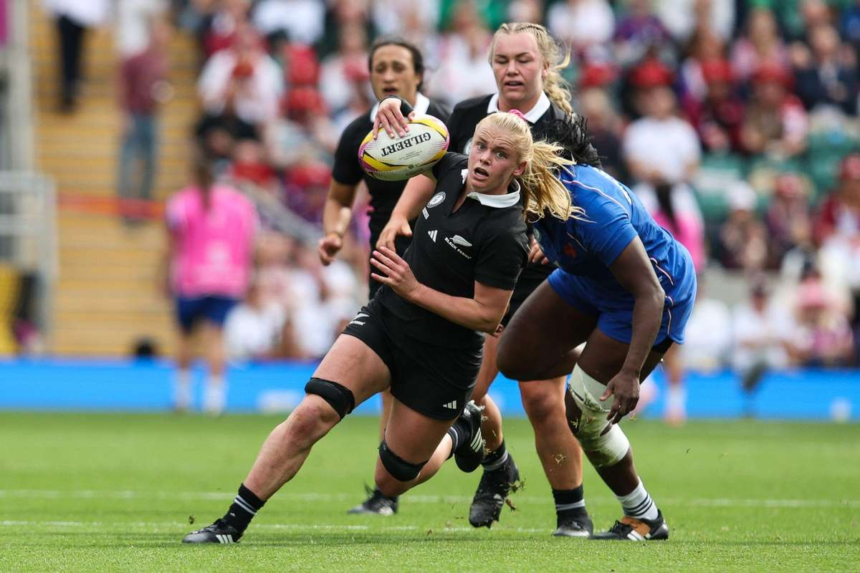
New Zealand’s Dominance in Women’s Rugby
In a display of sheer resilience and tactical supremacy, New Zealand triumphed over France in the third-place playoff of the Women’s Rugby World Cup, marking a definitive 42-26 victory at the storied Twickenham Stadium. This game not only reaffirmed the Black Ferns’ undefeated streak against loss after loss in consecutive matches but also underscored their historical prowess in women’s rugby.
A Match That Spelled Control
From the outset, New Zealand established an iron grip on the match, entering halftime with a commanding 26-7 lead. The Black Ferns showed a ruthless attack, scoring four tries in the opening half, including a flurry of points scored in the frantic final minutes before the break. In stark contrast, France struggled to find momentum, only managing one try in the first half.
Highlighting Emerging Talent
The match also showcased the rising star Braxton Sorensen-McGee, whose scintillating speed and skill delivered two critical tries in the second half, bringing her impressive tournament tally to 11. Her performance is a clear indication of New Zealand’s dedication to nurturing young talent, augmenting their legacy as the top women’s rugby team.
Historic Context and Expectations
Despite their past glories, the Black Ferns found themselves reeling after a surprising semi-final defeat to Canada, a rare stumble in their storied World Cup journey. However, this bronze final was their first encounter in such an unfamiliar setting, presenting a unique challenge that they managed to navigate with aplomb. Historical records suggest they had once shared third place with France in the inaugural Women’s Rugby World Cup in 1991, but this match served as a definitive assertion of their current superiority.
France’s Repeated Heartbreak
For France, this third-place match was another chapter in a narrative fraught with disappointment. Having never managed to reach the final of the World Cup, their hopes of clinching a medal took another hit against an overwhelming New Zealand side. The unfortunate pattern of defeats continued, with this match representing their second loss in eight attempts for a bronze medal. Their earlier semifinal defeat to England only compounded their frustrations.
Key Moments and Player Performances
The match featured not just collective excellence but also individual brilliance. France’s scrum-half Pauline Bourdon opened the scoring for her team early on with skillful determination. However, New Zealand’s swift response came through Ruahei Demant, who leveled the score, giving fans a glimpse of the back-and-forth excitement that characterized the match.
As the match unfolded, New Zealand’s dominance grew increasingly apparent. With tries from Sylvia Brunt and crucial late-game efforts from players like Jorja Miller and Laura Bayfield, the final score reflected their superiority. As emotions surged, the farewell of veteran Portia Woodman-Wickliffe, a player who returned from retirement, added a poignant note to the clash.
A Final Whistle and a Last Attempt
Even as France valiantly sought to rally in the closing stages, scoring three late tries through Lea Champon, Gabrielle Vernier, and Emilie Boulard, it was ultimately too little, too late. As the final whistle approached, New Zealand’s standout performer, Renee Holmes, capped the victory with a precise penalty kick, cementing their triumph in this decisive match.
The Implications of This Showdown
The result is a testament to New Zealand’s continued dominance in women’s rugby and raises unanswered questions concerning France’s future performances and long-awaited aspirations to finally reach a World Cup final. As the sport evolves, onlookers will keenly observe these two nations as they refine their strategies and rebuild for future confrontations on the grand stage.