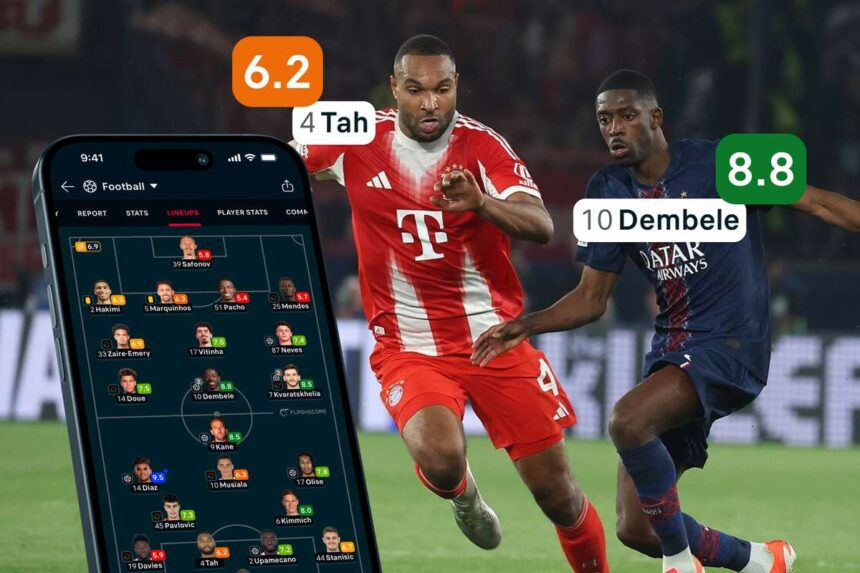
Introduction of the New Flashscore Rating System
Flashscore has long been a trusted resource for football fans, providing insights and updates on matches. After three years of utilizing a football rating system, the company has made significant enhancements to offer what is now known as the new Flashscore Rating. This innovative assessment tool aims to cater to both casual observers of the sport and data enthusiasts alike, promising a comprehensive evaluation of player performance.
Overview of the Rating Mechanism
The new Flashscore Rating synthesizes an impressive array of over 70 different statistics into a singular grade. To ensure the accuracy of player evaluations, a player must actively participate in the game for at least 10 minutes. As the match progresses, the rating dynamically adjusts to reflect the player’s contributions and impact on the field.
Automated Evaluation Process
At the core of this updated rating model lies a fully automated system that utilizes historical performance benchmarks and extensive data from Opta. This process is designed to be objective, removing any potential biases that could arise from human judgment. Flashscore has developed a proprietary algorithm that has undergone rigorous testing with contributions from industry experts, including renowned figures like Petr Čech, a legend in the Premier League.
Comprehensive Player Assessment
The new rating system evaluates players based on a variety of contributions beyond traditional metrics such as goals and assists. Every player’s performance is assessed in relation to their specific role on the pitch, acknowledging the diversity in player responsibilities. Whether a player is primarily involved in defense, progression, playmaking, or attacking, the rating accurately reflects their individual duties and contributions to the team’s overall performance.
Dynamic Player Profiling
This advanced profiling ensures that evaluations consider the true essence of each player’s role. For instance, a ball-winning midfielder who excels in disrupting opponents will not be unfairly judged against attacking statistics, thereby preventing biases toward goal-scorers. The system gives weight to critical moments in the game, such as significant chances created or mistakes leading to goals, allowing for a fair representation of a player’s impact.
Detailed Player Card Information
The outcome of this thorough analysis is presented in the new Player Card feature, where users can access comprehensive information on each player’s performance. This includes contextual data that helps explain the rating, highlighting key moments that distinguished their contributions during the match.
Understanding Player Roles
There are several key roles identified in the player profiling process, each measuring different aspects of a player’s game. The Goalkeeping role focuses solely on a goalkeeper’s abilities, evaluating their shot-stopping skills, volume of saves, passing contributions, and overall presence in the game. The Defending role accounts for various defensive actions, including tackles, interceptions, and box defending efforts. The Progression role acknowledges a player’s effectiveness in advancing the ball, while the Playmaking role measures opportunities created through expected assists and other pivotal contributions to the attacking play.
Attacking Role Evaluation
The Attacking role primarily assesses a player’s threat to score, taking into account metrics like expected goals and shots within the penalty area. This nuanced approach provides a clearer picture of a player’s involvement in the game, ensuring they are rated based on their actual contributions rather than presumptive expectations.
Game-Changing Moments and Performance Bonuses
The final rating also incorporates various bonuses derived from game-changing moments. Some of these positive contributions include critical goals or defensive actions, while negative factors might involve errors leading to goals or missed opportunities. Additionally, certain skills can influence the rating both positively and negatively, such as a player’s finishing ability or their effectiveness in shot-stopping.
Conclusion
With the launch of the new Flashscore Rating system, fans and analysts can now expect a more refined and detailed understanding of player performance across over 250 leagues. By focusing on individualized roles and contributions, Flashscore enhances the way the football community engages with the beautiful game, reflecting the depth and complexity of players’ performances on the pitch.