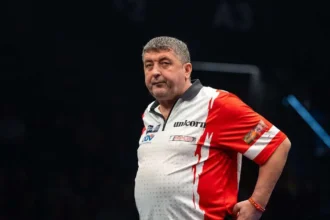
A Forbidden Alias: The Saga of Tim Pusey
In a stunning blow to individual expression, Australian darts player Tim Pusey finds himself caught in the crosshairs of the Professional Darts Corporation’s (PDC) stringent regulations. Just as he was preparing to shine at the prestigious World Darts Championship, an arbitrary ruling stripped him of his identity, barring him from using the nickname ‘The Magnet.’ A moniker that, while harmless in intent, is now deemed too risqué when tossed alongside his last name. The absurdity of this decision prompts reflection on the suffocating constraints placed upon athletes who dare to sprinkle a bit of personality into their public personas.
Nicknames Under Siege: A Battle Against Censorship
Pusey’s dismay is not a lone battle; instead, it echoes the frustrations of many. In a world where individuality and creativity should reign supreme, athletes like Pusey are shackled by an unsolicited moral code. The PDC, operating under the vague authority to deem names as “offensive” or “vulgar,” seems intent on enforcing a bland uniformity that strips color from the sport, not to mention joy from the players. The absurdity becomes evident when one considers that this ruling didn’t spring from genuine concern but rather a rigid enforcement of arbitrary standards that border on draconian.
The Ripple Effect of Silencing Self-Expression
Humorlessly, Pusey jested about needing a new nickname, even tossing the idea of hosting a poll to let fans choose. But what sort of nickname can truly encapsulate a player’s essence when most of the lighthearted options have been obliterated by an overzealous governing body? In an age where self-branding is crucial, the risk of losing one’s personality shouldn’t be part of the bargain. The calls for charm and charisma are now met with a corporate spirit of caution—an ideological clash that perfectly exemplifies the sterile environment of competitive sports.
Flashpoints of Resistance: Historical Precedents
Pusey’s debacle is far from an isolated incident. Recall England’s Owen Bates, whose aspirations to be ‘The Master’ were quashed just before a previous World Championship. The consistent barrage of nickname restrictions not only stifles personal identity but fosters an air of resentment among competitors who should be celebrated for their individuality, not censored for it. The PDC’s paternalistic approach raises questions: who profits from this suffocating regulation? It certainly diminishes the sport’s vibrancy, leaving behind a hollowed-out shell bereft of personal expression.
Anticipating the Championship: A Flavorless Future?
As the countdown to the World Darts Championship ticks away, the absence of colorful personalities looms large. Players will take to the hallowed halls of Alexandra Palace under an oppressive ceiling of conformity, where their ambitions must be tailored to fit a mold that is increasingly outdated. With the final match slated for January 3rd, the question arises: how much longer can the sport endure this repressive atmosphere before it extinguishes the very spark that drew audiences in? The prospect of drab uniforms and sanitized branding threatens to undermine the passion that should typify such events. Without nicknames that embody the vibrancy of the competitors, the sport risks slipping into an abyss of monotony.
Conclusion: A Call for Reconsideration
The narrative surrounding Tim Pusey is symptomatic of wider issues plaguing professional sports—issues that challenge the interplay between individuality and governance. Athletes deserve the freedom to express their personas colorful as they may be, and the impassioned reactions to such bans underline a collective yearning for authenticity. A moment for introspection is beckoning; perhaps it’s time to dismantle the barriers that seek to mute the spirit of competition. In a world hungry for authenticity, the absurdity of this situation must spark not just conversations but a revolution against the stifling confines of regulations that inhibit the natural exuberance of sport.