Chaos in Madrid: Vuelta’s Celebrations Derailed
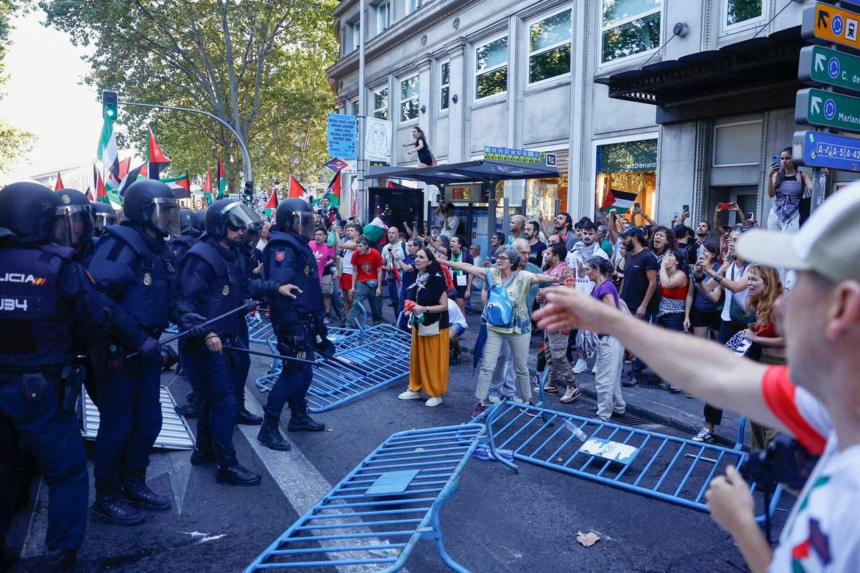
The Spanish capital was supposed to celebrate cycling glory as the Vuelta a España approached its thrilling conclusion. Yet, instead of the anticipated fanfare, the streets erupted in turmoil as police clashed violently with pro-Palestinian protesters. What should have been a moment of triumph turned into a battlefield, highlighting the deep divisions within society, spilling over into the realm of sport.
Protesters Take to the Streets
Protesters overwhelmed by anger barricaded key routes, defying the race’s progress. Images broadcast on local networks depicted chaos, with demonstrators tipping over metal barriers and occupying the streets, starkly contrasting the spirit of competition. As the cyclists approached the city, they faced not just their physical limits but the heavy weight of political unrest that threatened to overshadow their achievements.
Political Discord Amidst the Race
This clash of ideologies was not unexpected; mere hours before the race reached its climax, Socialist Prime Minister Pedro Sanchez expressed admiration for the protesting crowd, framing their actions within the context of justice and solidarity. Yet, such support only fueled the tension as the cyclists grappled with the unfolding chaos surrounding them, leading to threats of withdrawal from competitors fearing for their safety.
A Symbol of Resistance
The protests targeted the Israel-Premier Tech cycling team, a poignant reminder of how global issues seep into the fabric of sports. It begs the question: when do athletic competitions become platforms for activism? The overarching narrative transformed from a test of human endurance to a representation of societal grievances. Vuelta’s finale morphed into a flashpoint where sports and politics collide.
Security Measures and Unpredictable Outcomes
With more than a thousand police officers mobilized for what was supposed to be a festive event, the anticipation was palpable. Instead, the situation devolved into conflict, with loyal supporters of the race witnessing a stark and disturbing reality. The races, typically infused with an exhilarating spirit, mirrored the complexities of political dissent and protests for justice, as echoing chants reverberated against the backdrop of sprinting cyclists.
Reflections on Society’s Divide
As the Vuelta’s conclusion loomed, Sanchez’s declaration at a rally underscored a societal shift: “Today marks the end of the Vuelta.” But did he mean the end of a race, or perhaps an end of innocence? The cyclists, now mere players in a broader game, highlighted the interconnection between sport and political discourse. This tension manifests not only in the streets but in the hearts and minds of those engaged in viewing the spectacle unfold.
The Aftermath: Understanding Conflict’s Ripples Through Sport
What was once a race turned into a moment of reckoning, questioning the roles athletes and political figures play in society. It remains crucial to acknowledge how rapidly an event can transition from sport to protest, reshaping the narratives that define our times. The Vuelta a España may have crowned a champion, but the real battle lies in the fractures exposed along the route.
The aftermath leaves the observer to ponder: Is there a space for unity amidst the divisions of protest, or will this be yet another chapter in the ongoing saga of societal discord?