Chaos Reigns as Protests Disrupt Vuelta a España
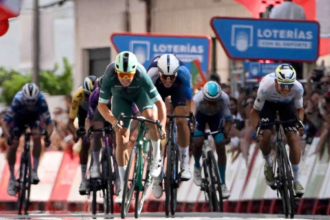
The 11th stage of the Vuelta a España spiraled into disorder as pro-Palestinian protesters turned the finish line into a surreal scene of conflict and confusion. Organizers, opting for a hasty and controversial decision, declared there would be no stage winner after a chaotic race concluded three kilometers from the anticipated finish in Bilbao.
The announcement was made with a startling lack of regard for the athletes involved. “Due to incidents at the finish line, we have decided to take the time at three kilometers before the line,” proclaimed the race director on Radio Vuelta. This decision not only robbed the competitors of a legitimate victory but also sent shockwaves through the cycling community, igniting fierce debates on the intersections of sport, politics, and security.
The Athletes’ Unresolved Frustration
Cyclists Jonas Vingegaard and Tom Pidcock found themselves caught in the eye of a storm that was entirely out of their control. Both riders had demonstrated remarkable prowess, only to be thwarted by the unexpected chaos. “It’s hard to describe the disappointment, to be honest,” Pidcock lamented, conveying a sense of loss not just for the day’s potential victory, but for the integrity of the sport itself. “I felt like today was my day. There should always be a finish line.”
Vingegaard, too, expressed his discontent, linking his ambitions to a personal milestone, the birthday of his one-year-old son. Such a personal connection to the day made the sudden cessation of competition feel not just disappointing, but tragically unfair.
Protesters Take Center Stage
While the athletes contended for glory, a separate battle unfolded on the sidelines. Protesters wielded banners and waved Palestinian flags, their voices rising above the clatter of bike wheels and cheers of onlookers. Police struggled to manage the tide of activism surging through the streets, their inability to contain the protest underscoring a failure in security measures. The scene was a bizarre juxtaposition of competitive spirit and fervent political expression—a reminder of the broader societal issues infringing on the realm of sports.
This was not the first time protests had disrupted the Vuelta; the Professional Cyclists’ Association had previously voiced concerns over safety protocols amid escalating tensions. Yet, on this day, the culmination of it all ended in a situation devoid of a winner. As the riders sped into what was meant to be a triumphant conclusion, they instead encountered the tangible reality of protest that had little regard for their efforts on the road.
A Sport in Turmoil
The fallout from this incident signals a troubling trend for professional cycling. As riders like Vingegaard and Pidcock grapple with the ramifications, the integrity of the sport is at risk. What does it mean when competitors are left without closure? When the climax of their efforts becomes an afterthought drowned out by political fervor? This incident raises the uncomfortable question of how far activism can clash with athleticism, leaving fans and athletes alike to ponder where the lines should be drawn.
In an age where social justice movements spill onto every conceivable platform, the Vuelta a España serves as a glaring example of how sports cannot be insulated from the tumult of the outside world. Each pedal stroke in competition now echoes the calls for action echoing from the sidelines—an unsettling souvenir of a race that was commandeered, where the outcome was determined not by the speed of legs but the cries for justice.
As the dust settles and the riders prepare for the remainder of the race, one can only wonder how incidents like these will shape the future of cycling. Will it remain merely a sport, or will it become a battleground for issues far beyond the road? The answers lie not just with the cyclists, but with the very society that watches and participates.