The Downfall of a Champion: Viktor Axelsen’s Frustrating Return
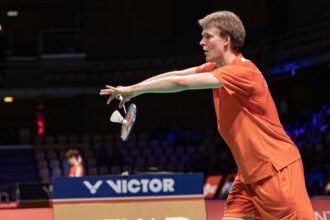
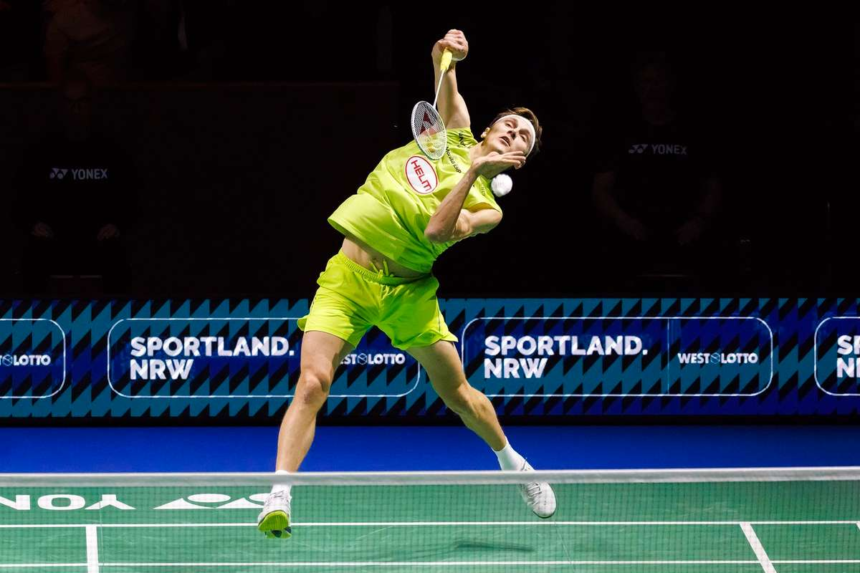
In a shocking turn of events, the spotlight that once shone on two-time Olympic champion Viktor Axelsen dimmed dramatically in his long-awaited comeback match at the Hong Kong Open. After an agonizing seven-month recovery from back surgery, fans and critics watched in disbelief as Axelsen succumbed to Japan’s rising star, Kodai Naraoka, with staggering scores of 15-21 and 7-21. The defending champion’s return was anything but triumphant, marking a fall from grace that left everyone questioning his once-dominant prowess on the court.
A Comeback That Didn’t Deliver
Despite the horizon of hope upon his return, Axelsen’s performance belied his prior glory. Once a player revered for his power and precision, he looked a mere shadow of his former self. Corralled by nerves and uncertainty, Axelsen started the match with an alarming capitulation, conceding an early 7-3 lead to Naraoka. Although the Dane briefly leveled at 10-10, any thoughts of a resurgence evaporated as a flurry of errors compounded his distress, paving the way for a swift first-set loss.
The Harsh Reality of Injury
This defeat raises unsettling questions surrounding Axelsen’s physical condition and mental readiness. Struggling with a “disc in his lower back pushing a nerve,” the aftermath of his surgery introduced not only physical pain but an evident psyche burdened with expectations. Axelsen himself admitted to a pressing reality—that he was “far from 100% at [his] usual level.” The rigor of competitive badminton demands a relentless commitment, and one has to wonder whether the rigorous demands of the sport are too taxing for a body already aged by injury.
The Weight of Expectation
The episode unfurls a storyline laden with intensity as Axelsen walked onto the court grappling not only with his physical limitations, but also the spectral weight of his previous accolades. This disheartening match exposed not merely his vulnerabilities but also the perilous demand of the sporting arena where every player dances precariously upon the tightrope of expectations. In this intense frame, it’s evident that triumph and catastrophe hinge on the finest of margins, leaving Axelsen to redirect his journey amidst growing shadows on the court he once dominated.
Looking Ahead: A Glimmer of Hope?
Although the defeat stings painfully, there remains an undeniable glimmer of resilience in Axelsen’s confession of comfort with competing once more. This reflects an inner strength that champions often possess—the ability to confront adversity, even when cloaked in disappointment. The road to recovery is littered with setbacks, yet perhaps this misstep can serve not as an end but as a bitter, vital ingredient for a tougher comeback. After all, legends are not defined solely by their victories but by their tenacity in overcoming each fall.
The Broader Implications
This stunning loss should ignite conversations within the broader sports community, addressing the need for athletes to not just return but to rebuild. As spectators, fans and analysts are invited to ponder: what does it truly mean to return to competition after significant injury? And more importantly, can Viktor Axelsen reclaim his place among greatness, or has the relentless hand of time and pain stifled his once-unrivaled capability? The raw narrative of this moment could serve as a catalyst for change in how we perceive athletic recovery and performance.