Manchester United’s Descent into Mediocrity
The echoes of Old Trafford are eerie, haunted by the ghost of Manchester United’s past glories that seem to slip further from grasp with every passing defeat. Recently, the iconic club found itself in familiar turbulent waters again, with the board’s decision to fire manager Ruben Amorim—a choice that felt less like a strategic move and more like a desperate gasp for air amidst a drowning ship.
A Manager with a Failing Legacy
Amorim exited the scene with one of the most dismal win percentages in the annals of Red Devils’ history. Paradoxically, he was unceremoniously booted just as supporters whispered about a potential turnaround. A disheartening 1-1 draw against Leeds seemed to shatter any remaining optimism, dooming the club to further scrutiny.
Darren Fletcher’s Thankless Task
Stepping into the vortex of chaos was Darren Fletcher, a former player stripped of glory days, now tasked with steering this sinking ship. Despite aiming to inject stability, his first efforts yielded another underwhelming draw, leaving the entire season hanging by a fraying thread. When faced with relegation-threatened Burnley, a subpar performance was simply unacceptable.
FA Cup: A Flicker of Hope or a Grim Reality?
The FA Cup, once a symbol of silverware aspirations, transformed into yet another brutal pitfall for United. After a disheartening exit from the Carabao Cup, a matchup against Brighton offered a glimmer of respite or further humiliation. Brighton, coming off a dismal Premier League streak, should have been ripe for the taking. Yet, history has shown that underestimating rivals leads to downfall.
Positional Battles: A Struggling Giant
Despite a comprehensive 4-2 victory earlier in the season, the specter of Brighton’s recent dominance loomed large. The statistics were painfully stark: the Seagulls often reveled in their ability to score first in their clashes. The predictability of United conceding first was a heartbreaking reminder of their profound defensive inability. Every kickoff became a precursor to despair.
A Glimmer Amidst the Shadows
Yet in a season defined by turmoil, Kobbie Mainoo emerged as a beacon of nascent talent—crafting opportunities and showcasing skill. His influence grew as he prosecuted United’s attacks, asserting a commanding performance against Brighton. However, individual brilliance rarely saves teams mired in systemic failure.
Defensive Decay: The Crumbling Fortress
Brighton’s opening goal, a painful reminder of United’s porous defense, punctured the fleeting exhilaration the crowd felt. The visitors sensed vulnerability, as if they were predators among prey. The historical failures of United to come back from early deficits began haunting the pitch, while optimism withered as quickly as it surfaced.
Welbeck’s Revenge: A Bitter Pill
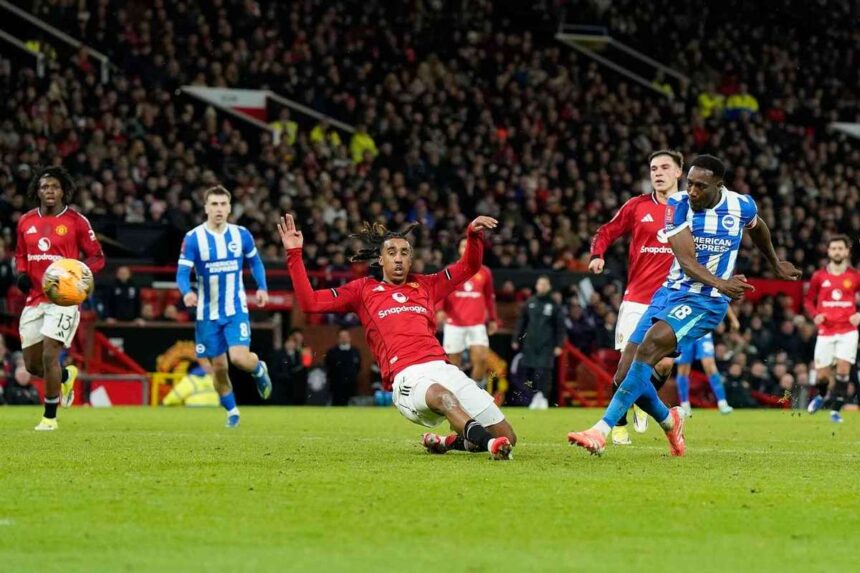
As the second half unfolded, Danny Welbeck—once a United prospect—punished his former club with a painful reminder of wasted potential. Scoring against his old side, his prowess highlighted the melancholic truth: the club failed to nurture its talent. Welbeck’s goal acted as a final nail in the coffin, driving home the stark reality that United were left grappling with their own ghosts.
A Fractured Finish
As the curtain closed on this particular chapter of despair, Benjamin Sesko netted a consolation goal—his efforts overshadowed by chaos across the pitch. Shea Lacey’s red card, a slap in the face to decency in football, crystallized United’s downward spiral, marking yet another disgraceful chapter in their tumultuous season.
Hope remains elusive for Manchester United as they careen into darkness, a stark reminder of what happens when complacency and poor management intertwine within the glorious history of football. Are they destined to remain eternally in the shadow of their former selves, or will redemption ever emerge from the ashes?
Source: Flashscore